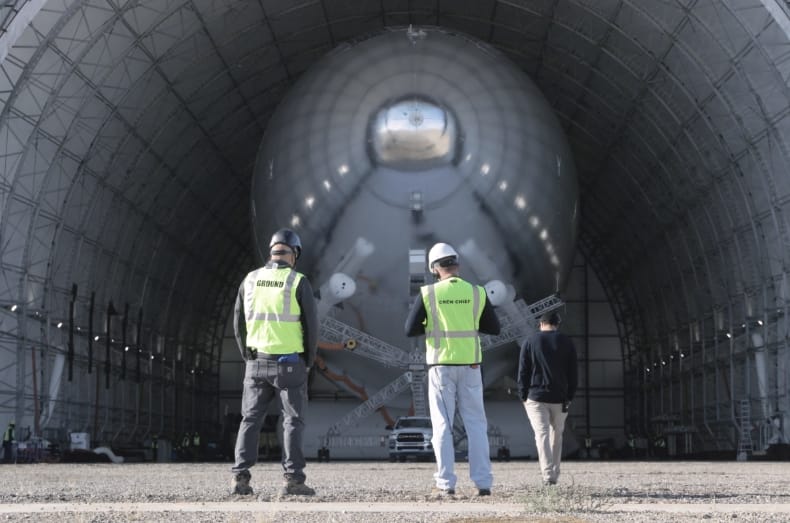
How Does Sceye’s Stratospheric Airships Monitor Greenhouse Gases
1. The Monitoring Gap Could Be Bigger Than People Think
GHG emissions from global warming are tracked by means of a plethora of ground stations as well as occasional flight campaigns by aircraft and satellites operating hundreds of kilometers in the air above the surface. Each has its own drawbacks. Ground stations are sporadic and geographically biased towards wealthier nations. Aircraft flights are expensive, short-duration, and narrow in coverage. Satellites have global reach, but struggle with the accuracy required to pinpoint the exact source of emissions — leaky pipelines, a landfill that releases methane, or an industrial unit that is not reporting its output. The result is a system of monitoring that has grave weaknesses at exactly the magnitude where accountability & intervention matters most. Stratospheric platforms are becoming seen as the missing middle layer.
2. Altitude provides a monitoring advantage Satellites can’t duplicate
There’s a geometric argument for that 20 kilometres are better than 500 kilometres for emissions monitoring. A sensor operating at a stratospheric altitude could observe a ground footprint of up to a hundred kilometres while still being close enough determine emission sources with sufficient level of resolution. These include individual facilities or road corridors. It can also distinguish agricultural zones, and so on. Satellites monitoring the same region from the low Earth orbit cover it more quickly but with lower granularity and the time between revisits means that a methane-rich plume that appears, then disperses over a period of time may not be captured at all. A platform holding its position over an area of interest for days or weeks at a stretch transforms the intermittent snapshots into continuous surveillance.
3. Methane is a Priority Target for a Reason
Carbon dioxide catches the majority people’s attention, but methane is the greenhouse gas in which immediate improvements to monitoring can make the biggest difference. Methane has a higher toxicity than CO2 over the 20-year duration as well as a significant amount of methane emitted by humans comes from point sources — infrastructures for oil and gaz in waste facilities, agriculture, and other activities that are both detectable and, in most cases, fixable in the event of identifying. Methane monitoring that is real-time and from a continuous stratospheric platform mean that operators, regulators, as well as governments can identify leaks as they occur rather than identifying them in the months following annual inventory reconciliations, which are often based on estimates rather than measurements.
4. Sceye’s Airship Design is Apt for the Monitoring Mission
The factors that define an excellent telecommunications platform as well as a top environmental monitoring platform are more in common than you think. Both require a long-lasting endurance along with steady positioning and important payload capacities. Sceye’s airship that is lighter than air takes care of all three. Since buoyancy serves the basic task of staying aloft and sustaining the aircraft’s energy consumption, the budget isn’t consumed by generating lift and can be used for propulsion and for powering any sensor suite the mission requires. For greenhouse gas monitoring specifically it’s necessary to carry imaging systems, spectrometers, as well as data processing hardware that doesn’t have the severe weight restrictions which limit fixed-wing HAPS designs.
5. Station Keepers Are Not Negotiable to useful environmental data
A monitoring system that drifts is a platform for monitoring that produces data that’s difficult to analyze. Knowing precisely where a sensor was at the time it recorded a measurement is crucial in determining the source of that reading to the source. The focus of Sceye’s on real station-keeping — ensuring fixed positions above a target area through active propulsion isn’t just one of the metrics used to measure performance. It’s what makes the information scientifically sound. Stratospheric earth observations are only effective for regulatory or legal purposes when the positional record is robust enough to stand up to scrutiny. Drifting balloon platforms are however powerful their sensors are, don’t provide this.
6. The Same Platform can Monitor Oil Pollution and Wildfire Risk During the Same Time
One of the most compelling benefits of the multi-payload design is that the various environmental monitoring missions complement each other within this same vessel. Airships operating on the ocean or in coastal areas can have sensors that are calibrated to pollutant detection in conjunction with those monitoring methane and CO2. Over land, the exact platform architecture allows for wildfire detection technology that detects heat signatures, smoke plumes and stress indicators for vegetation which are the precursors to ignition events. Sceye’s approach to mission design does not consider these as distinct programs that require separate aircrafts but as parallel use cases to infrastructure that’s already set and operating.
7. Detecting Climate Disasters at a Real-Time Rate the Response Equation
There’s a difference in knowing that a wildfire began 6 hours ago versus being aware that it began just twenty minutes from now. Similar to industrial accidents that release toxic gasses, flood events that threaten infrastructure, or sudden methane leaks from permafrost. The ability to identify climate disasters and their causes in real time from a persistent stratospheric database gives emergency planners authorities, government agencies, as well as industrialists a window of opportunity for intervention that simply does not occur when monitoring is based on repeat cycles of satellites or ground-based reports. The value of that window increases when you consider that the early stages for most environmental emergencies are in the same timeframes when intervention is the most efficient.
8. This Energy Architecture Makes Long Endurance Monitoring Viable
Monitoring of environmental conditions only provides their true value if a platform remains in the station for a in a sufficient amount of time to make an accurate data record. A week’s worth meter readings of methane in an oil field will tell you something. Months of continuous data gives the user something that can be implemented. It is necessary to overcome the problem of night-time energy -the platform has to store enough power during daytime to allow for all of its systems throughout the night, without affecting the position or sensor operations. The advancements in lithium-sulfur battery chemistry which have energy densities of approximately 425 Wh/kg, combined with increasing the efficiency of solar cells, are what make a true closed power loop practicable. With neither, longevity is something of an aspiration and not being a standard.
9. Mikkel Vestergaard’s Personal Background explains the Environmental Importance
It’s worth understanding why a company that is a stratospheric aerospace puts such a significant emphasis on greenhouse gas monitoring and disaster detection rather than leading purely with connectivity revenue. Mikkel Vestergaard’s past experience applying technology to major humanitarian and environmental problems gives Sceye an underlying philosophy that is reflected in the goals that the company prioritises and how it presents its platform’s purpose. The capabilities for monitoring the environment aren’t a side-payload added onto an aforementioned telecoms vehicle appear more responsibly socially. Instead, they have a deep conviction that the stratospheric network should be responsible for climate change and it is possible for the same platform to do both without compromising either.
10. Data Pipeline Data Pipeline Is as Important as the Sensor
Monitoring greenhouse gas levels from the stratosphere is just half the problem. getting that information to people who need it in a form that they can react to, in similar to real-time is the other part. A stratospheric-based platform with onboard processing capability as well as direct downlink with ground stations can decrease the gap between decision and detection significantly contrasted to systems that batch data to be later analyzed. For applications involving natural resource management and monitoring of regulatory compliance or emergency response, the timeliness of the data can be a factor more than its accuracy. Integrating the data pipeline into platforms from start, rather than treating it as an afterthought is a key element that distinguishes serious stratospheric observation and sensor campaign experiments. Check out the most popular what are the haps for site info including sceye haps project status, Monitor Oil Pollution, Wildfire detection technology, what’s the haps, softbank sceye partnership haps, sceye haps softbank partnership, SoftBank investments, Real-time methane monitoring, sceye haps airship status 2025 2026 softbank, sceye haps airship status 2025 2026 softbank and more.
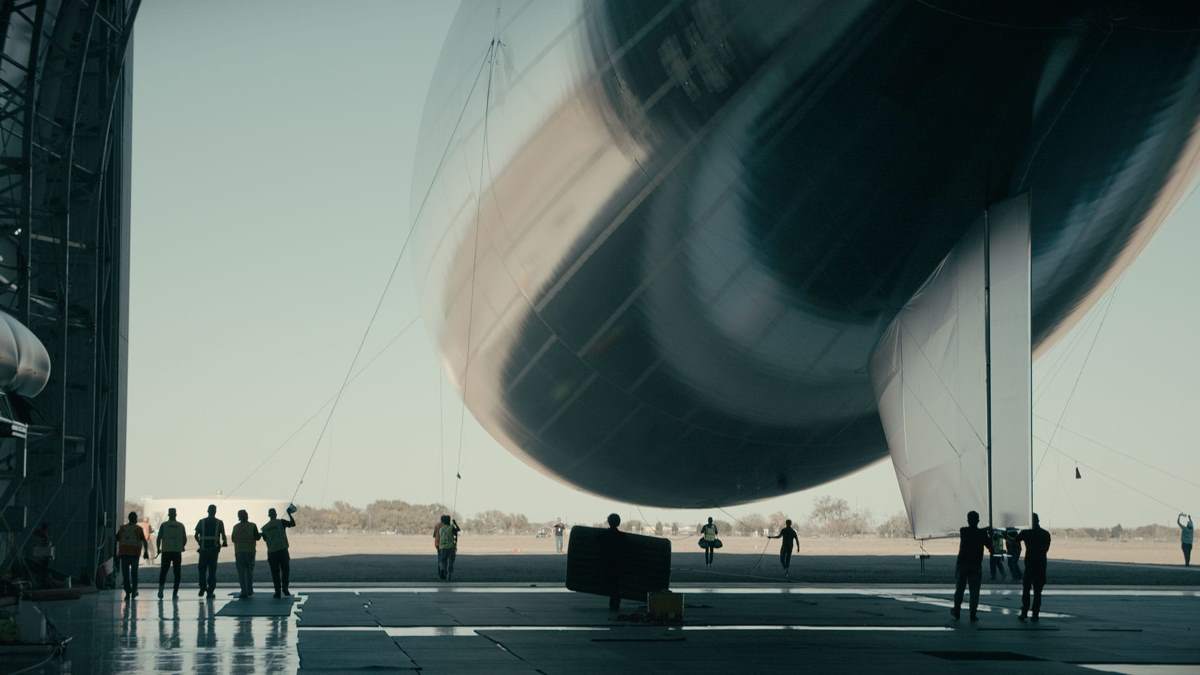
How Stratospheric Platforms Are Changing Earth Observation
1. Earth Observation Has Always Been Constrained to the Observer’s Place
Every advancement in our ability to assess the planet’s surface has come from finding the most optimal vantage point. Ground stations allowed for local precision but did not have the reach. Aircraft could extend range, but they consumed oil and required crews. Satellites brought coverage around the world, but also introduced distance, which traded precision and revisit frequency with respect to scale. Each increment in altitude helped solve some problems, while creating some others. The trade-offs embedded in each approach have shaped our knowledge about our planet. It also shaped, most important, what we not able to discern enough to implement. Stratospheric platforms provide a vantage place that is positioned between satellites and aircraft in ways that solve many of the most enduring issues rather than simply shifting the two.
2. Persistence Is the Capability to Observe that alters everything
The single most powerful thing that a stratospheric platform can offer earth observation. It isn’t the level of resolution not the area of coverage, and definitely not sensor sophistication. It is the persistence. The ability to follow the same location over time, for weeks or even days at a time, without gaps in the record of data, alters the type of questions which earth observation could answer. Satellites address questions of state how is the location look like at this time? Continuous stratospheric platforms provide answers to questions about the process: how is the situation evolving in the right direction, what is the rate is it influenced by what elements and at what point is intervention required? Monitoring of greenhouse gases, natural fires, flood progress and the spread of coastal pollution The questions about process are the ones that affect decision-making and require consistency that only observation over time can offer.
3. The Altitude Sweet Spot Produces Resolution That Satellites Do Not Match at Scale
Physics determines a relationship between an altitude, a sensor aperture and ground resolution. A camera operating at 20km is able to attain ground resolution levels that require a large aperture to replicate from low Earth orbit. This means that a stratospheric observation platform is able to distinguish distinct infrastructure components — pipes, tanks for storage farms, vessels for coastal transportwhich are visible as sub-pixel blurred in satellite imagery at an equivalent cost. For instance, monitoring the spread of pollution from an offshore facility in particular in determining the exact location of methane leaks within the pipeline’s path or tracking the leading edge of a wildfire through complex terrain, this resolution advantages directly impacts the specificity of information available to individuals and those making decisions.
4. Real-Time Methane Monitoring becomes Operationally Usable From the Stratosphere
Monitoring satellites for methane has significantly improved in recent years, but the combination of revisit frequency and resolution limits means that satellite-based methane monitoring tends to identify large, persistent emitters rather than isolated release from specific points. A stratospheric platform that performs real-time methane monitors over an oil and gas-producing zone, a large land area, or a waste management area alters the dynamic. Continuous observation at high-resolution can pinpoint emission events as they occur. They can attribute them to specific sources using a degree of precision which satellite data does not regularly provide, and generate an exact time-stamped source-specific proof that regulatory enforcement and voluntary emission reduction programs have to function successfully.
5. The Sceye’s Way of Observation Integrates the broader Mission Architecture
What differentiates Sceye’s methodology for stratospheric ground observation versus using it as a separate installation of sensors is incorporation with observation capabilities inside a larger multi-missions platform. The same vehicle with greenhouse gas sensors also carries connectivity equipment including disaster detection and monitoring systems and potentially other environmental monitoring payloads. This isn’t only a cost-sharing exercise — it is a clear indication that the data streams from various sensors become more valuable in conjunction than when they are used separately. The connectivity tool that observes is more valuable for operators. An observation platform that provides emergency communications is advantageous to governments. Multi-mission platforms increase the effectiveness of a single stratospheric system in ways distinct, single-purpose vehicles are unable to replicate.
6. Oil Pollution Monitoring Illustrates the operational value of close Proximity
Controlling the oil-based pollution of offshore and coastal environments is an area where stratospheric measurements offer significant advantages over satellite and airborne approaches. Satellites can spot large slicks however struggle with the precision required to determine expanding patterns, shoreline contact as well as the nature of smaller releases before larger ones. Aircraft can achieve the necessary resolution, but they are unable to maintain continuous coverage across large areas without excessive operational costs. A stratospheric platform holding position on the coast is able to follow pollution events from initial awareness, to spread as well as shoreline impacts and eventual dispersal – providing the continuous temporal and spatial data that both emergency responses and legal accountability need. The ability to track oil pollution over a long observation period without gaps is just not possible with any other platform type with comparable costs.
7. Wildfires Observation from the Stratosphere Captures the Ground Teams’ Unseen
The perspective that altitude stratospheric gives over active wildfires differs in qualitative terms from those found at ground levels or from aircrafts with low altitude. The behavior of fires across complex terrain — such as the ability to see ahead of the fire front, crown fire development, the interaction of the fire with variations in wind patterns and the formation of fuel water gradients- is evident in its complete spatial context only from sufficient altitude. A stratospheric viewing platform for an active fire can provide incident commanders with a continuous, broad-ranging view of fire behavior which allows them to make resource allocation decisions from what the burning fire is actually doing rather than what the ground crews of specific regions are experiencing. Finding climate disasters that are occurring in real time from this vantage point doesn’t just improve response -it also improves the quality of the command decisions made throughout the duration of an incident.
8. The Data Continuity Advantage Compounds Over the course of time
Individual observations have value. Continuous observations have compounding value that is non-linear with the length of time. A week’s stratospheric observations over a farming region is the baseline. Months reveal seasonal patterns. The year encompasses the entire year-long cycle of growth including water use soil conditions, and the variation in yield. The records of multiple years are the basis for understanding what the regional landscape is changing due to climate variations and land management practices and water availability trends. When it comes to natural resource management including agriculture, forestry as well as water catchment and coastal zone management -the cumulative record of observations is typically more valuable than any single observation, regardless of the resolution or how timely it is delivered.
9. The Engineering that enables Long Observation Missions Is Maturing Rapidly
Stratospheric satellites for earth observations are dependent on the platform’s ability to stay at its station long enough to yield accurate data records. The energy systems that control endurance – solar cell effectiveness on stratospheric airplanes, lithium-sulfur batteries that have energy density close to 425 Wh/kg; the closed power loop that sustains all systems during the diurnal cycle are advancing at a rate that is getting closer to making multi-week months-long stratospheric flights operationally feasible instead of aspirationally scheduled. Sceye’s efforts to develop the technology at New Mexico, focused on making sure that these energy systems are tested under operating conditions that are more realistic than laboratory projections, represents the kind of technological progress that directly leads to longer observation missions and more valuable data records for the applications that depend on the systems.
10. Stratospheric Platforms Are Creating an entirely new layer of environmental Accountability
Perhaps the most profound long-term impact of mature stratospheric observation capability is what it does to the about environmental compliance and sustainable management of natural resources. When continuous, high-resolution, and persistent monitoring on emission sources, changes in land use as well as water extraction and pollution events is available continuously rather than frequently, the accountability landscape changes. Industries, agricultural companies along with governments and companies involved in resource extraction all act differently when they understand that the activities they’re engaged in are continuously monitored by a higher authority and using data that is precise enough to be legally meaningful as well as timely enough to inform the appropriate response to damage before it becomes irreparable. Sceye’s topospheric platforms as well as the greater category of high altitude platforms that carry out similar observation tasks, are creating the foundations for a future where environmental accountability is grounded in continuous observation rather than regular self-reporting — a change that’s implications go far beyond the aerospace sector that is making it possible. View the most popular softbank sceye partnership haps for website info including high-altitude platform stations definition and characteristics, High altitude platform station, marawid, high-altitude platform stations definition and characteristics, sceye haps airship specifications payload endurance, sceye disaster detection, japan nation-wide network of softbank corp, Beamforming in telecommunications, Stratospheric platforms, sceye haps project and more.